Updating cabinet hardware is one of the easiest and most impactful DIY upgrades you can make. For less than $100 and an afternoon of work, you can completely transform your kitchen or bathroom. I've installed hardware on hundreds of Charlotte cabinets, and I'm sharing the professional techniques that ensure perfect results.
Why Proper Placement Matters
The difference between DIY and professional-looking results often comes down to consistent measurements. Eyeballing it leads to uneven spacing that stands out.
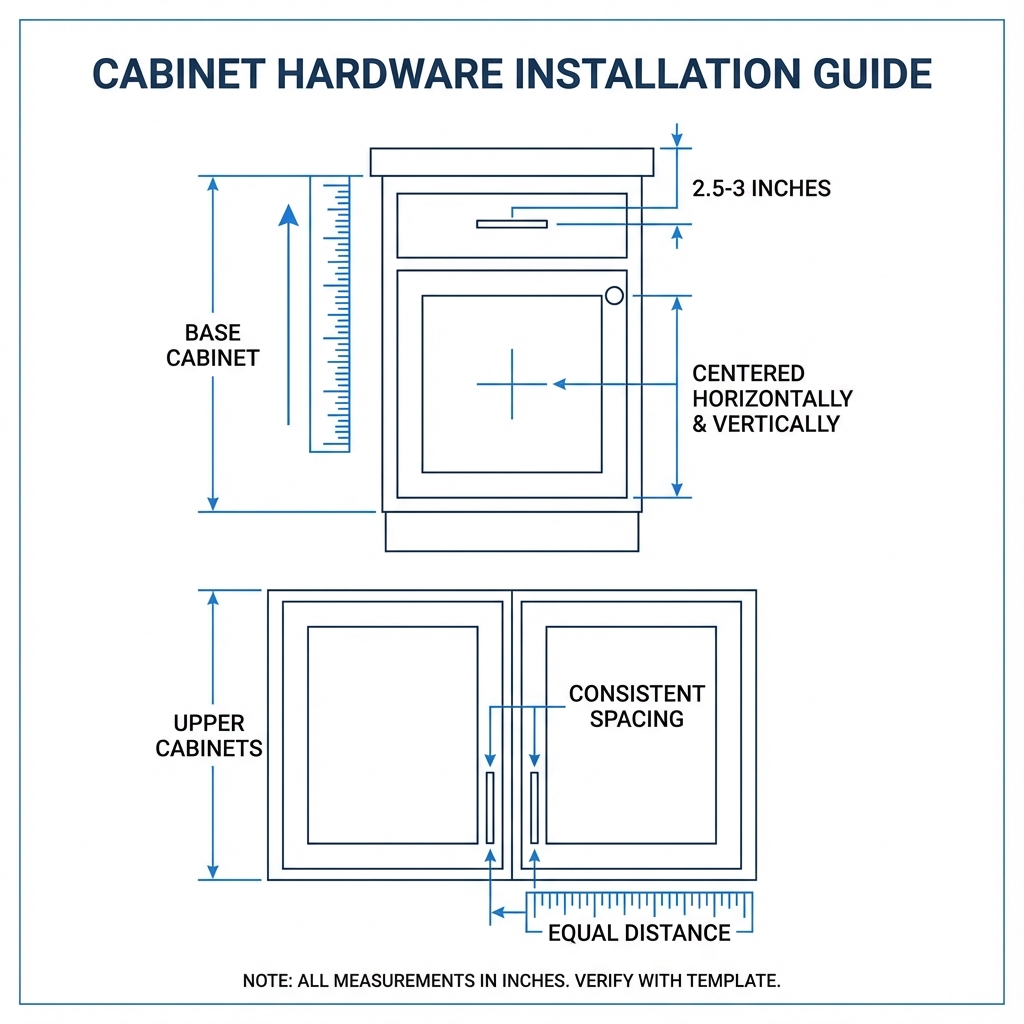
Professional hardware placement measurements
Choosing Between Knobs and Pulls
Knobs
- ✅ Best for: Small doors, traditional kitchens
- ✅ Single screw = easier installation
- ✅ Less expensive
- ❌ Harder to grip for large drawers
Pulls (Handles)
- ✅ Best for: Drawers, modern kitchens
- ✅ More comfortable to use
- ✅ Contemporary look
- ❌ Two screws = more precise measurement needed
Pro Recommendation
The most popular combo: Knobs on doors, pulls on drawers. This gives you traditional elegance with modern functionality.
Standard Measurements
Follow these industry-standard measurements for professional results:
Upper Cabinets (Doors)
- Knobs: 2.5" from bottom corner (both directions)
- Pulls: Centered horizontally, 2.5-3" from bottom
Lower Cabinets (Doors)
- Knobs: 2.5" from top corner (both directions)
- Pulls: Centered horizontally, 2.5-3" from top
Drawers
- Small drawers (under 24"): Single pull, centered
- Large drawers (24"+): Single pull centered, OR two pulls 3" from each edge
- Vertical placement: Centered on drawer face
Tools You'll Need
- Power drill with bits
- Tape measure
- Pencil
- Level
- Painter's tape (prevents drill-through damage)
- Hardware template (optional but highly recommended)
Step-by-Step Installation Process
Step 1: Create a Template
Make a simple jig from cardboard or buy a commercial template. This ensures every hole is in the exact same spot. This is the secret to professional results.
Step 2: Mark First Cabinet
Measure carefully on your first door/drawer. Use a level to ensure pulls are perfectly horizontal. Mark both screw holes with a pencil.
Step 3: Put Tape on Back
Place painter's tape where the drill will exit. This prevents splintering and chipping on the interior surface.
Step 4: Drill Pilot Holes
Use a drill bit slightly smaller than your screws. Drill straight through. Pro tip: Wrap tape around your drill bit to mark the depth.
Step 5: Install Hardware
Insert screws from the back, hand-tighten the hardware from the front, then give a final quarter turn with a screwdriver. Don't overtighten - you can crack the cabinet face.
Step 6: Repeat Consistently
Use your template for every cabinet. Consistency is key - one misplaced pull ruins the whole look.
Common Mistakes & How to Avoid Them
Mistake #1: Inconsistent Spacing
Solution: Always use a template or jig - never freehand your measurements.
Mistake #2: Wrong Drill Bit Size
Solution: Your pilot hole should be slightly smaller than the screw shaft, not the threads.
Mistake #3: Drilling Too Deep
Solution: Mark your bit with tape to prevent drilling into countertops or damaging the opposite side.
Mistake #4: Not Checking Screw Length
Solution: Measure your door/drawer thickness. Screws should be 1/4" shorter than the thickness to avoid poke-through.
Replacing Existing Hardware
If you're updating old hardware:
- Same size/spacing: You're golden - just swap them out
- Different spacing: Fill old holes with wood filler, sand, paint, then drill new holes
- Covering old holes: Choose larger backplates or repositioning them can hide old holes
Charlotte Climate Considerations
Our humidity affects cabinet hardware:
- Choose quality finishes - cheap hardware tarnishes quickly in humid climates
- Stainless steel or brushed nickel hold up best
- Oil-rubbed bronze can develop patina unevenly with humidity
Budget Guide
Typical Charlotte kitchen (15-20 cabinets):
- Budget: $50-75 (basic knobs/pulls)
- Mid-range: $100-200 (quality finishes)
- High-end: $300+ (designer hardware)
Installing cabinet hardware is a perfect weekend DIY project that dramatically improves your kitchen's look. Take your time with measurements, use a template, and you'll get professional results. Need help or want a flawless installation guaranteed? I'm just a call away!